Planning flatbed hire in Islington
On a dropside, the awkward part of the job is rarely the drive. It is the stop at the other end. If two people can clear the deck in one unbroken run, the vehicle stands at the kerb only while goods are moving. If boards, bags or furniture have to go up stairs, through a hallway or round to a back garden, the truck will sit unattended between trips, and that changes which parking arrangements apply.
This guide is written for households, trades and commercial users in Islington. It starts with that kerbside question, then covers permissions that are easy to confuse, choosing a deck length, weight and licence limits, restraint, safe side unloading and the hire terms worth checking. Vehicle figures below are representative of each category, not promises about a particular truck. Confirm payload, dimensions and equipment for the vehicle you are actually allocated, and read the supplier's written terms before relying on anything.
Continuous unloading, breaks and estate moves
Islington Council's moving-home guidance separates loading that is continuous, without a break, from loading and unloading with breaks. Where breaks are expected, you need permission to park in a bay, and the council asks for at least 14 days' notice. That guidance applies to house moves only. It is not a general exemption for trades delivering materials, so builders and merchants should read the signs at the exact spot. For a move, time a trial carry from kerb to door if you are unsure whether loading will be continuous.
Estate moves follow a different route: the council points residents to Housing Services rather than the street process. Ask the estate manager where an open-bed vehicle may stand, how long it can wait and whether any entrance limits height or width. The answer may favour a shorter deck.
Sources: Islington Council: moving home
Bay suspensions and road closures are separate permissions
Sometimes the vehicle is not the only thing using the road. A pallet truck working off a tail lift, a crane lift or a small machine driven off the deck can obstruct the carriageway or footway. Islington's road closure guidance asks for ordinary applications at least six weeks ahead and says a closure licence does not include parking suspensions.
Treat a clear bay and a closed stretch of road as two applications, usually made by whoever runs the works. Strategic routes need longer notice, and neither approval is guaranteed. Set the hire date around the decisions.
Sources: Islington Council: road closures
Choosing a deck length for the load and the stop
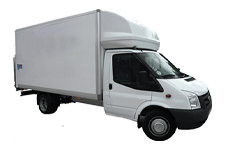
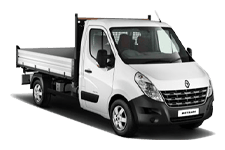
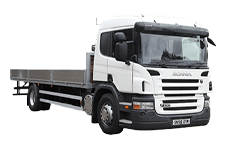
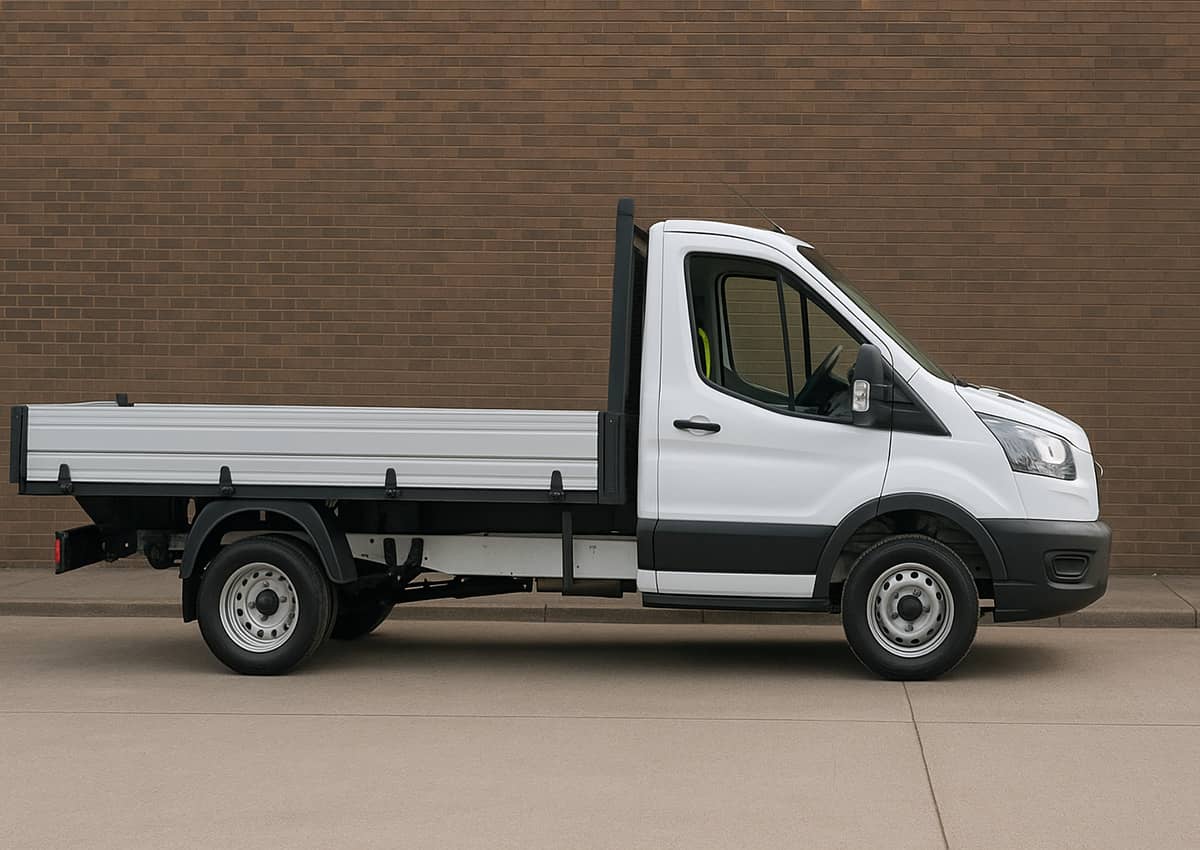
Start by measuring the longest item and the gap you expect to stand in, then pick the smallest body that carries the load safely. A 3 metre dropside, with a representative payload of about 1,100 kg, suits fencing panels, boards, bagged materials and hand tools, and sits in the 3.5 tonne range. A 4 metre dropside, shown with a deck of roughly 4 by 2 metres, adds length for pipe and timber without moving up to a lorry.
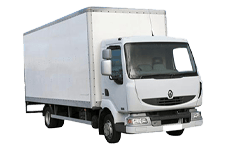
A 7.5 tonne dropside, with a representative deck of around 6 by 2.35 metres, handles scaffolding, several pallets and larger machinery. It also needs space to pull in, open the sides and let people work around it, and a driver with the right entitlement. If the load is mostly furniture or boxes that must stay dry, an enclosed Luton may be the better fit.
Sources: Nationwide Hire UK: 3 metre dropside, Nationwide Hire UK: 4 metre dropside, Nationwide Hire UK: 7.5 tonne dropside
Gross weight is not the same as payload
The figure on the vehicle plate is the maximum authorised mass, also called gross vehicle weight. It covers the whole vehicle as it travels: body, fuel, driver, passengers and everything on the deck. Payload is only what is left once the vehicle's own weight is taken off, so a 3.5 tonne dropside carries far less than 3.5 tonnes of cargo.
Count pallets, packaging, straps and tools as part of the load. On a multi-drop run, check the balance after each stop, because removing goods from one end can leave an axle overloaded even when the total is fine. For dense materials such as sand, blocks or steel, a weighbridge check settles doubts. If a figure is close to the limit, split the load into two trips rather than guessing.
Sources: GOV.UK: vehicle weights explained, DVSA: HGV overloading basics
Matching the licence to the plated weight
A standard car licence, category B, generally covers vehicles up to 3.5 tonnes maximum authorised mass, which takes in the smaller dropsides. Above 3.5 tonnes and up to 7.5 tonnes, the driver needs category C1. Read the categories printed on each driver's licence rather than relying on memory.
Compare those categories with the plate on the vehicle you are allocated, not the category name on a booking. Hire providers may also set their own age or experience conditions, so ask before the day. If only one person in the team holds C1, plan who drives each leg.
Sources: GOV.UK: driving licence categories
Restraining an open load and any overhang
Weight and friction alone will not hold a load under hard braking, and the dropsides should not be relied on to do the job unless they are rated and used as the official guidance allows. Choose restraint for the actual items: straps to suitable anchor points, friction matting, chocks for round loads and the headboard against forward movement. Sheeting and rope hooks are not restraint anchors.
Before loading, check the platform, sides and anchor points for damage, and ask the supplier what restraint is included instead of assuming. If timber or pipe will extend past the rear or sides, measure the projection. The overhanging-loads guidance sets out marking and, for some projections, advance notice, so check it against your figure before setting off.
Sources: DVSA: load securing basics, DVSA: ways to secure a load, DVSA and DfT: overhanging loads on vehicles
Side unloading and who does the lifting
Dropping the sides lets you unload from the kerb or across the deck, but it puts people beside traffic and close to goods that may have shifted on the journey. Stand the vehicle on the most level, firm ground available, apply the handbrake, keep pedestrians clear of the working area and lower one side at a time, checking nothing is resting against it.
Agree before the day who lifts what. If a merchant's crane or a tail lift is involved, confirm who operates it and that its rating covers the heaviest item; a tail-lift rating is a separate figure from vehicle payload. Heavy or awkward pieces need two people or mechanical handling, and nobody should ride a platform unless its instructions allow it.
Keep the unloading plan short enough to follow: where goods will be stacked, who watches the road and who signals the driver if the vehicle needs to move.
Sources: HSE: safe loading and unloading
Hire terms worth confirming in writing
Only the booking documents you sign govern your hire. Published terms from other hire companies are useful as a prompt for questions, but they are not your contract, and conditions vary between suppliers. If something is unclear, ask for it in writing before the hire starts.
Ask for the deposit and how damage is assessed, mileage allowance, fuel policy, insurance cover and excess, any limits on use such as waste or site work, and the return time. Do a walk-round at handover, photograph the deck, sides and any tail lift, and make sure existing marks are recorded on the paperwork.
Sources: Third-party reference: Nationwide Hire UK terms and conditions